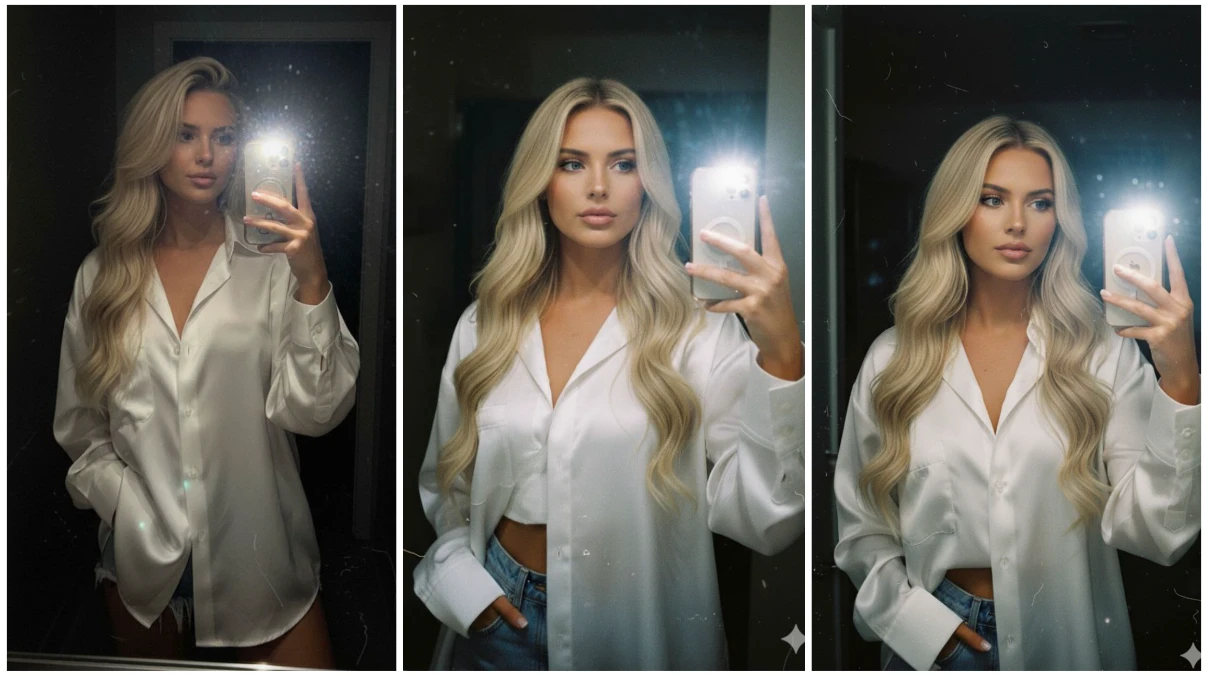
The early 2000s mirror selfie aesthetic has made a massive comeback in recent years. Those grainy, flash-lit photos taken with digital cameras and flip phones capture a nostalgic era that defined a generation. With Google Gemini’s AI technology, particularly through its Nano Banana implementation, you can now recreate these iconic mirror selfies without needing vintage cameras or outdated technology.
Understanding the Early 2000s Mirror Selfie Aesthetic
The early 2000s mirror selfie wasn’t just a photo—it was a cultural phenomenon. These images featured distinctive characteristics that made them instantly recognizable: grainy, low-resolution quality from early digital cameras, harsh camera flash reflecting off mirrors, awkward poses with the camera held at arm’s length or chest level, visible camera or phone blocking part of the face, typical 2000s fashion including low-rise jeans, velour tracksuits, band tees, and chunky highlights.
The technical limitations of early digital cameras created an accidental aesthetic that’s now considered vintage and cool. Cameras like the Sony Cyber-shot, Canon PowerShot, and early camera phones produced images with specific characteristics: 2-4 megapixel resolution creating natural grain, strong noise in low-light conditions, overexposed flash hotspots, limited dynamic range, and slight color shifts toward cooler tones.
What is Google Gemini Nano Banana?
Google Gemini represents Google’s most advanced AI model family. Gemini Nano is the lightweight, on-device version designed to run efficiently on smartphones and smaller devices. The “Banana” implementation refers to the specific optimization that allows Gemini Nano to generate images directly on your device without requiring cloud processing.
Unlike traditional AI image generators that require powerful servers, Gemini Nano Banana processes requests locally, meaning faster generation times, better privacy since images don’t leave your device, no internet dependency for generation, and the ability to create images anywhere, anytime.
For creating early 2000s mirror selfies, Gemini Nano Banana excels because it understands nostalgic aesthetics, can replicate vintage camera characteristics, processes requests in natural language, and allows quick iterations to perfect your desired look.
Step-by-Step Guide to Creating Early 2000s Mirror Selfies
Step 1: Accessing Google Gemini Nano Banana
To use Gemini Nano Banana for image generation, you’ll need a compatible device running the latest version of Android or ChromeOS with Gemini integration. Open the Google app or Gemini app on your device, ensure you have the latest updates installed, and navigate to the image generation section.
If Gemini Nano Banana isn’t available in your region yet, you can access standard Gemini through gemini.google.com or through Google’s AI Test Kitchen app, which provides early access to new features.
Step 2: Crafting the Perfect Prompt
The key to generating authentic early 2000s mirror selfies lies in detailed prompting. You need to describe not just what you want, but the technical characteristics that made those photos unique.
Basic prompt structure:
“Early 2000s mirror selfie, [person description], [fashion details], [camera characteristics], [setting details]”
Example prompts:
“Early 2000s mirror selfie of teenager in bathroom, wearing low-rise jeans and sparkly tank top, holding silver digital camera, harsh camera flash, grainy photo quality, 2 megapixel resolution, overexposed flash reflection in mirror, messy bathroom background with toothbrushes and soap bottles visible, nostalgic Y2K aesthetic.”
“2003 style mirror selfie, girl with chunky blonde highlights and butterfly clips, wearing pink velour tracksuit, flip phone camera quality, very grainy and low resolution, bathroom mirror with flash glare, early digital camera photo, authentic 2000s vibe.”
“Early 2000s bedroom mirror selfie, person in band t-shirt and baggy jeans, holding compact digital camera at chest level, harsh flash lighting, grainy low quality photo, 640×480 resolution, posters on wall behind mirror, nostalgic early internet era aesthetic.”
Step 3: Understanding Key Elements to Include
When prompting Gemini Nano Banana, emphasize these specific elements:
Camera and technical details should mention “digital camera,” “flip phone camera,” or specific models like “Sony Cyber-shot,” include resolution specifications like “2 megapixel,” “640×480,” or “low resolution,” add terms like “grainy,” “noisy,” “pixelated,” or “compressed,” and specify “harsh camera flash” or “overexposed flash.”
Fashion and styling elements include iconic 2000s clothing items, hairstyles like chunky highlights, side-swept bangs, or crimped hair, accessories such as butterfly clips, chokers, or studded belts, and makeup trends including frosted eyeshadow and glossy lips.
Setting and environment typically feature bathroom mirrors with visible toiletries, bedroom mirrors with posters and decorations, awkward angles and poses typical of the era, and visible mess or lived-in spaces that add authenticity.
Color and tone characteristics involve slight color shifts toward cooler blue tones, overexposed highlights especially on skin, crushed blacks with lost shadow detail, and overall flat, compressed look typical of early JPEGs.
Step 4: Generating and Iterating
Once you’ve crafted your prompt, submit it to Gemini Nano Banana. The generation typically takes 10-30 seconds depending on your device’s processing power. Review the generated image carefully.
If the result isn’t quite right, refine your prompt by adding more specific details about the camera quality, adjusting fashion or pose descriptions, specifying the exact type of flash reflection, or mentioning additional environmental details.
Generate multiple variations by slightly tweaking your prompt. Gemini learns from your iterations, so each subsequent generation often gets closer to your vision. Try different angles: “camera held low,” “camera at eye level,” “camera reflected in mirror,” or experiment with various 2000s fashion eras from early 2000 to 2005, as styles evolved significantly.
Step 5: Enhancing the Nostalgic Feel
If your generated image needs additional vintage treatment, you can use simple editing techniques. However, Gemini Nano Banana should handle most of the aesthetic directly if prompted correctly.
To enhance authenticity, add specific prompt details like “JPEG compression artifacts,” “digital noise and grain,” “slight motion blur,” or “date stamp in corner like old digital cameras.” These elements make the image feel genuinely vintage rather than artificially aged.
Advanced Prompting Techniques for Gemini
Creating Specific Scenarios
MySpace profile picture era: “Early 2000s MySpace mirror selfie, dramatic side angle, wearing band t-shirt and studded belt, dark eyeliner, scene kid aesthetic, holding silver digital camera, harsh flash, grainy quality, bathroom mirror, 2005 emo style.”
Flip phone bathroom selfie: “2004 bathroom mirror selfie taken with Motorola Razr flip phone, extremely low resolution, very grainy and pixelated, person wearing Juicy Couture tracksuit, harsh flash creating bright spot on mirror, authentic early camera phone quality.”
Digital camera bedroom shot: “2003 bedroom mirror selfie with Canon PowerShot camera, teenage girl in butterfly clips and spaghetti strap top, low-rise jeans, grainy 2 megapixel quality, overexposed flash, posters and fairy lights visible behind mirror, authentic Y2K aesthetic.”
Adding Authentic Details
The more specific you are about technical camera characteristics, the better Gemini understands the aesthetic you’re seeking. Mention specific camera types, exact resolution numbers, describe the flash behavior, and reference specific years for fashion accuracy.
Include environmental storytelling elements like “messy counter with makeup scattered,” “Justin Timberlake poster visible in background,” “AOL Instant Messenger open on computer screen in reflection,” or “Nokia phone charging on counter.” These details ground the image in a specific time period.
Common Issues and Solutions
Issue: Image looks too modern or high quality Solution: Emphasize “low resolution,” “grainy,” “2 megapixel,” and “early digital camera” in your prompt. Add “compressed JPEG” and “digital noise.”
Issue: Flash doesn’t look authentic Solution: Specify “harsh direct flash,” “overexposed flash hotspot,” or “bright flash reflection in mirror creating glare.”
Issue: Fashion doesn’t feel era-appropriate Solution: Research specific 2000s fashion trends and name actual brands and styles. Be specific: “Baby Phat logo,” “Von Dutch trucker hat,” or “Abercrombie & Fitch distressed jeans.”
Issue: Image lacks the nostalgic feeling Solution: Add emotional context to your prompt: “nostalgic early 2000s vibe,” “authentic Y2K aesthetic,” or “reminiscent of 2003 teenager bedroom photos.”
Tips for Perfect Early 2000s Mirror Selfies
Research authentic examples: Before generating, look at real early 2000s photos on Pinterest or archived MySpace/LiveJournal images. Notice the exact quality, flash behavior, and common poses.
Be specific with years: Fashion and camera quality changed significantly from 2000 to 2009. Specify “2003” or “2005” for more accurate results.
Layer your details: Don’t just describe the person—describe the camera, the mirror, the reflection, the background, and the overall quality all in one comprehensive prompt.
Use natural language: Gemini Nano Banana excels at understanding conversational prompts. You don’t need rigid formatting—just describe what you remember from that era.
Iterate and refine: Your first generation might not be perfect. Keep refining your prompt based on what you see. Each iteration teaches you what details matter most.
Why Gemini Nano Banana Works Well for This
Gemini’s strength lies in its understanding of cultural context and temporal aesthetics. It doesn’t just know what a mirror selfie looks like—it understands what made early 2000s mirror selfies specifically different from today’s selfies.
The Nano Banana implementation offers on-device processing, which means you can generate multiple variations quickly without delays. This rapid iteration is crucial for nailing the specific aesthetic you’re after.
Additionally, Gemini’s natural language processing means you can describe your vision conversationally rather than using technical AI art terms. You can literally say “like those bathroom selfies from when everyone had Razr phones” and Gemini understands the reference.
Creative Applications
Once you’ve mastered creating early 2000s mirror selfies, the applications are numerous. Create nostalgic social media content that resonates with millennials and Gen Z, develop Y2K aesthetic projects for design portfolios, generate authentic-looking characters for stories set in the early 2000s, or create themed profile pictures for retro social media events.
The early 2000s aesthetic has become so popular that brands and creators actively seek this nostalgic style. Being able to generate authentic-looking period-appropriate images is a valuable skill for digital content creation.
Prompt Detail
Keep the exact same real face — no alteration.\n\nA hyper-realistic cinematic mirror selfie captured with the look of an early 2000s phone camera — raw, slightly grainy, nostalgic lighting.\n\nA woman with long messy-but-beautiful hair, soft natural waves slightly tousled, a few strands softly covering her cheek. She’s taking a mirror selfie with an phone, the phone only partly visible in her hand and not blocking her face. \n\nThe focus stays on her reflection — calm, confident, and effortlessly beautiful. Her expression feels spontaneous, captured mid-moment.\n\nLighting: direct flash focused only on her face and front hair; slightly harsh flash halo typical of compact cameras. Background remains dim, cinematic, and softly blurred.\n\nHer white satin oversized shirt catches the flash softly, adding a touch of glow. Shadows contour her jawline and collarbone naturally, while soft highlights emphasize her cheek and lips.\n\nThe photo looks printed on glossy photo paper with faint tactile scratches, scuff marks, and minor dust specks visible under the flash — tactile, analog realism.\n\nTone: nostalgic early-2000s snapshot energy — dark, elegant, tactile, slightly imperfect but emotionally cinematic.”Keep the exact same real face — no alteration.\n\nA hyper-realistic cinematic mirror selfie captured with the look of an early 2000s phone camera — raw, slightly grainy, nostalgic lighting.\n\nA woman with long messy-but-beautiful hair, soft natural waves slightly tousled, a few strands softly covering her cheek. She’s taking a mirror selfie with an phone, the phone only partly visible in her hand and not blocking her face. \n\nThe focus stays on her reflection — calm, confident, and effortlessly beautiful. Her expression feels spontaneous, captured mid-moment.\n\nLighting: direct flash focused only on her face and front hair; slightly harsh flash halo typical of compact cameras. Background remains dim, cinematic, and softly blurred.\n\nHer white satin oversized shirt catches the flash softly, adding a touch of glow. Shadows contour her jawline and collarbone naturally, while soft highlights emphasize her cheek and lips.\n\nThe photo looks printed on glossy photo paper with faint tactile scratches, scuff marks, and minor dust specks visible under the flash — tactile, analog realism.\n\nTone: nostalgic early-2000s snapshot energy — dark, elegant, tactile, slightly imperfect but emotionally cinematic.”
Conclusion
Creating early 2000s mirror selfies with Google Gemini Nano Banana combines nostalgia with cutting-edge AI technology. By understanding the specific characteristics that defined that era’s photography—the graininess, the harsh flash, the awkward poses, and the iconic fashion—you can craft prompts that generate genuinely nostalgic images.
The key is specificity and authenticity. Don’t just ask for “an old photo”—describe the exact camera type, the specific fashion elements, and the technical limitations that made those photos unique. With practice and iteration, you’ll be generating perfect Y2K mirror selfies that capture the essence of an era when digital photography was new, social media was just beginning, and everyone had a chunky digital camera or flip phone documenting their lives one grainy, flash-lit mirror selfie at a time.
Start experimenting today, and you’ll discover that recreating the past is as simple as describing it to an AI that truly understands not just what things looked like, but what they felt like.